

From Idea to Environment

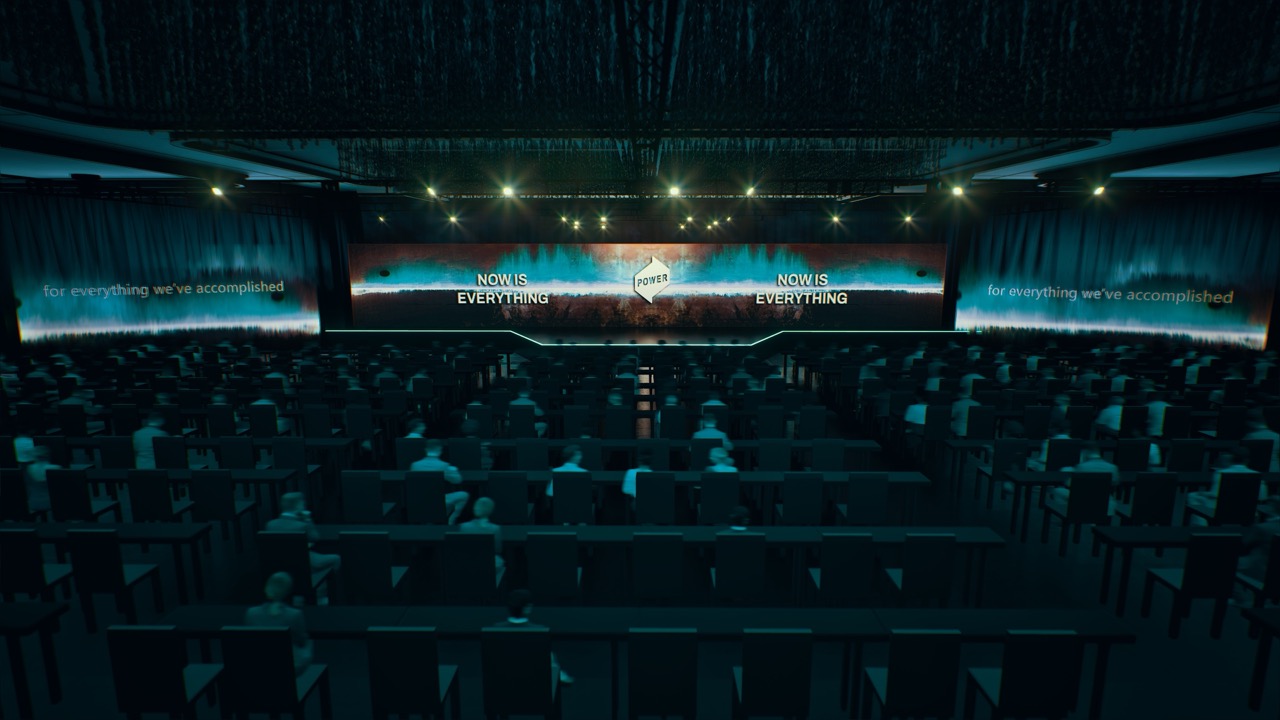
Great events do not start with equipment. They start with intention.
Creative development is where vision begins to take shape, long before any stage is built or any screen turns on. It is the process of translating a message into a physical and visual experience that people can feel the moment they enter a room.
Every project begins with questions. What is the purpose of the event. What should the audience take away. How should the space feel. What moments need to stand out. These answers guide every decision that follows.
From there, we build a creative framework. This includes visual direction, spatial design, content style, and audience flow. We define how the stage will live within the room, how screens will support storytelling, how lighting will shape mood, and how every element works together as a single system.
Moodboards and references help align direction, but clarity comes from structure. We move quickly into layouts, renderings, and technical drawings that bring ideas into a real environment. This is where creativity meets feasibility. Every design choice is evaluated not only for impact, but for how it will be built, powered, and operated.
Collaboration is essential. Creative teams, producers, and technical leads work together from the start. This ensures that what is imagined can be executed without compromise. It also allows us to identify opportunities early, whether that means enhancing a moment, simplifying a build, or improving efficiency.
Content is developed alongside the environment, not after. Screens are not treated as decoration. They are part of the narrative. Graphics, motion, and live feeds are designed to integrate seamlessly with the stage, creating a cohesive visual language throughout the event.
As the concept evolves, we refine. We simplify where needed. We elevate where it matters. The goal is not to add more, but to make every element intentional.
By the time we reach production, there are no surprises. The creative has already been tested against reality. The experience has been visualized, engineered, and aligned across every department.
What the audience sees feels effortless.
What makes that possible is a process that is anything but.
Related Articles




EVERLAST
PRODUCTIONS

